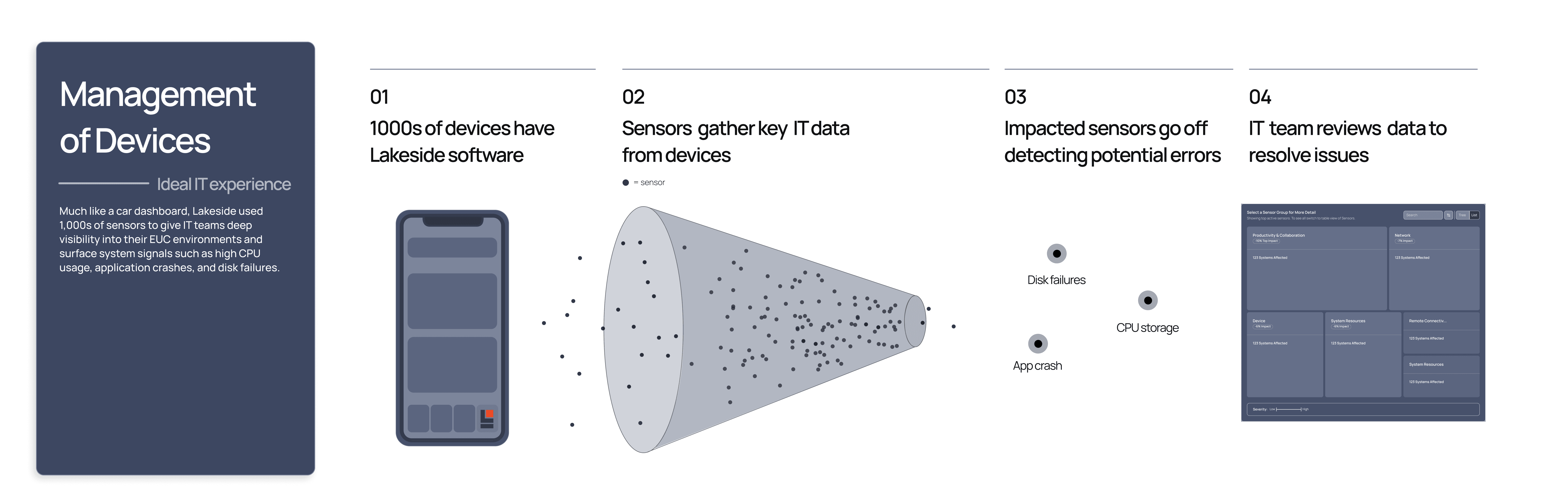
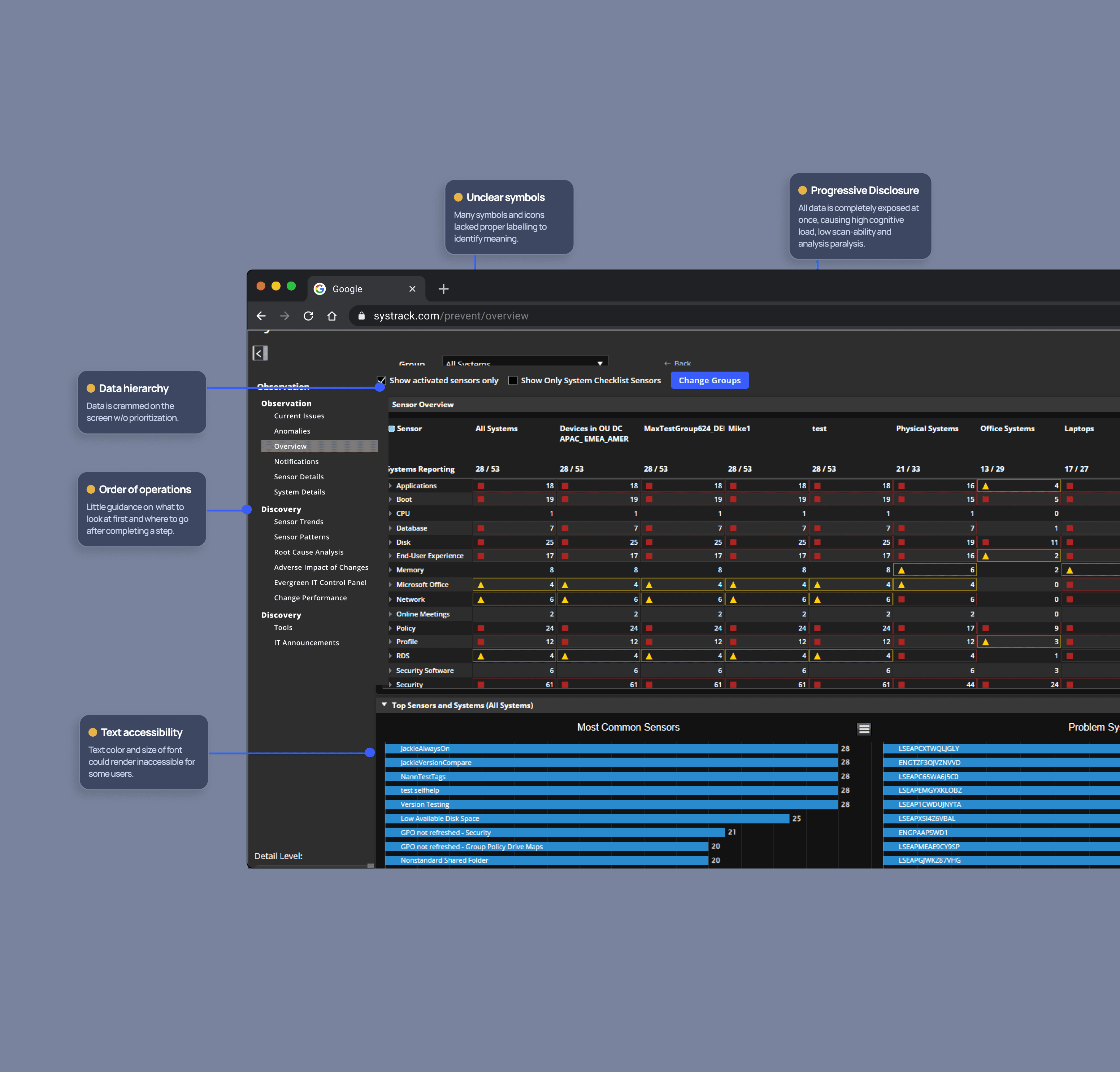
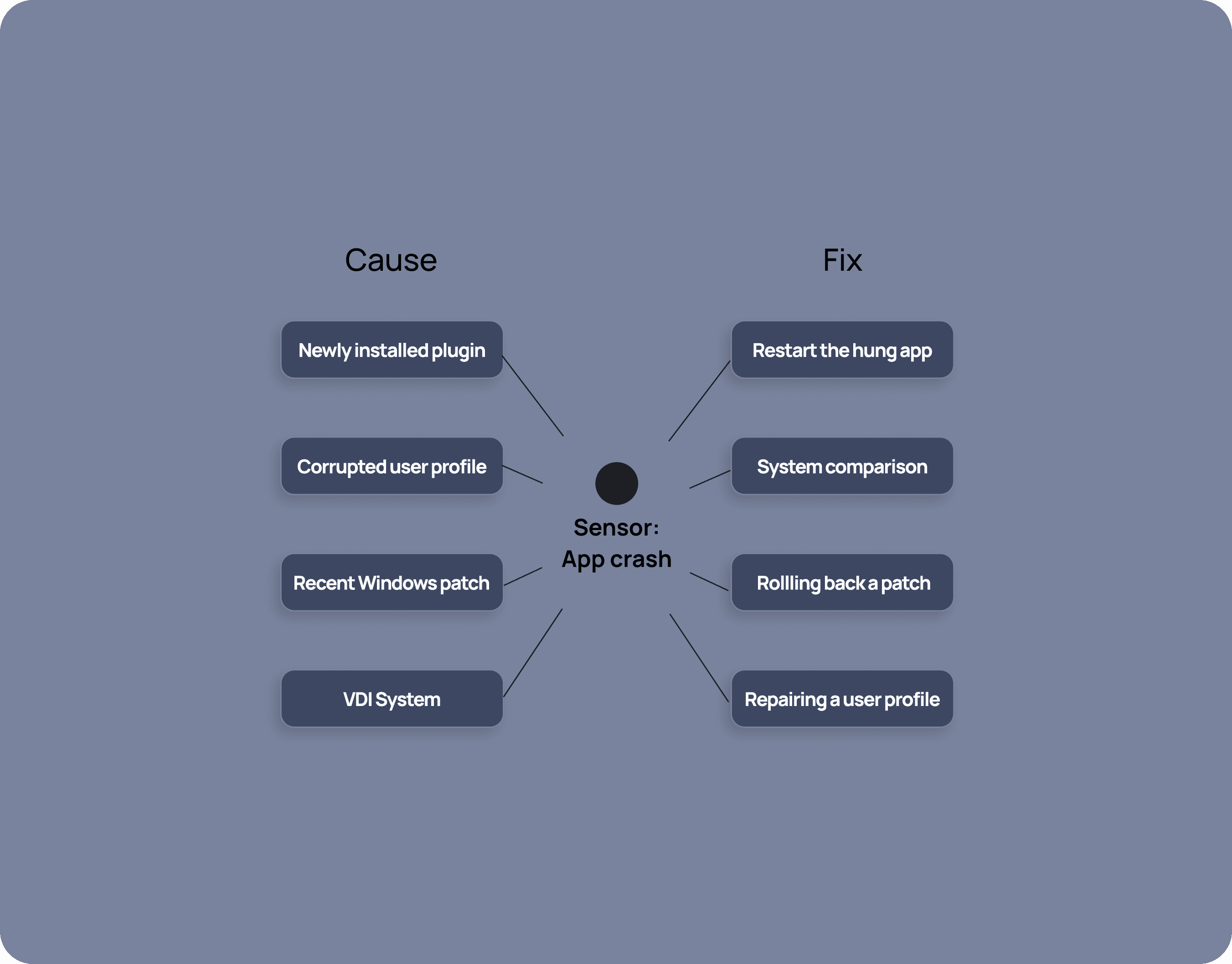
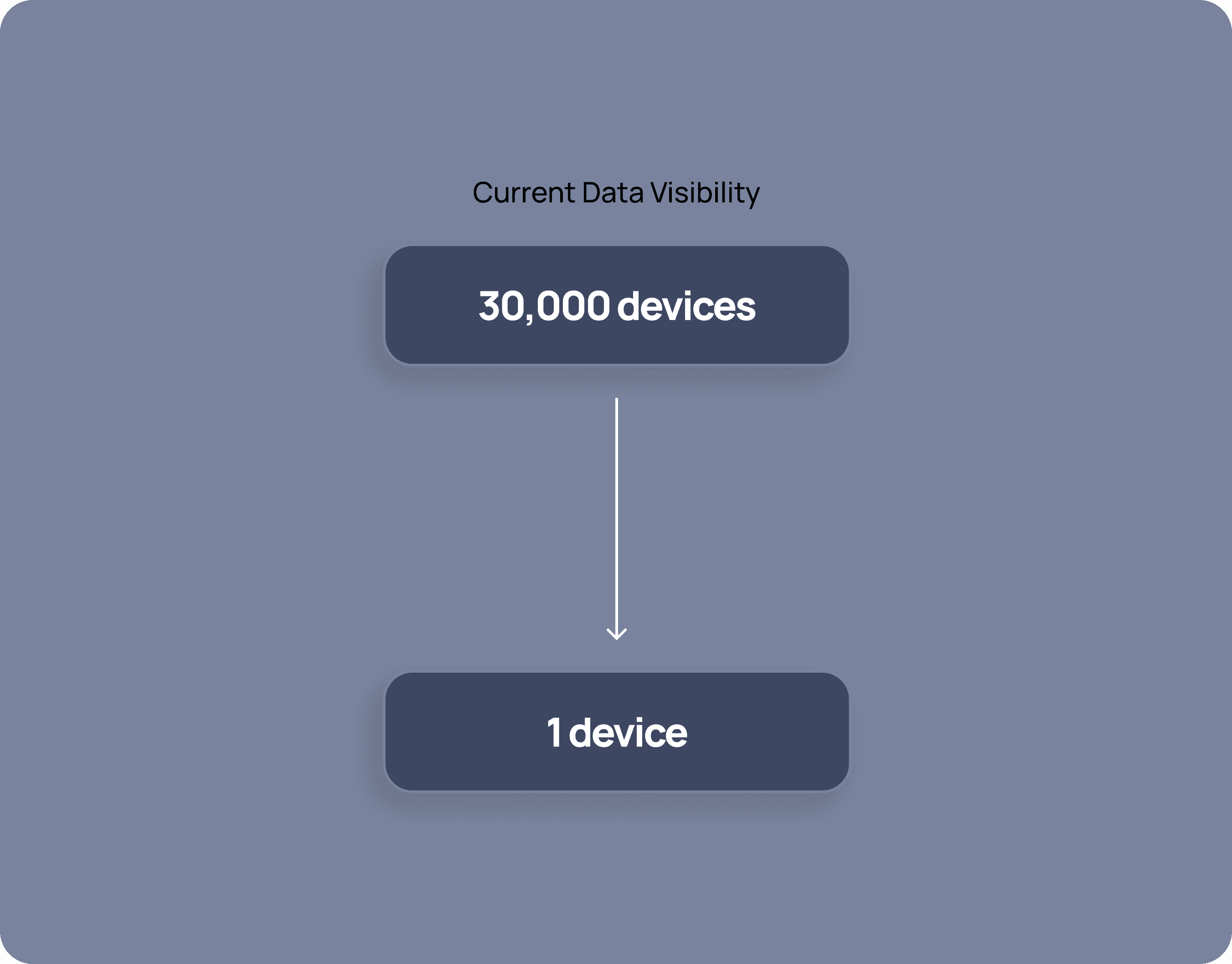
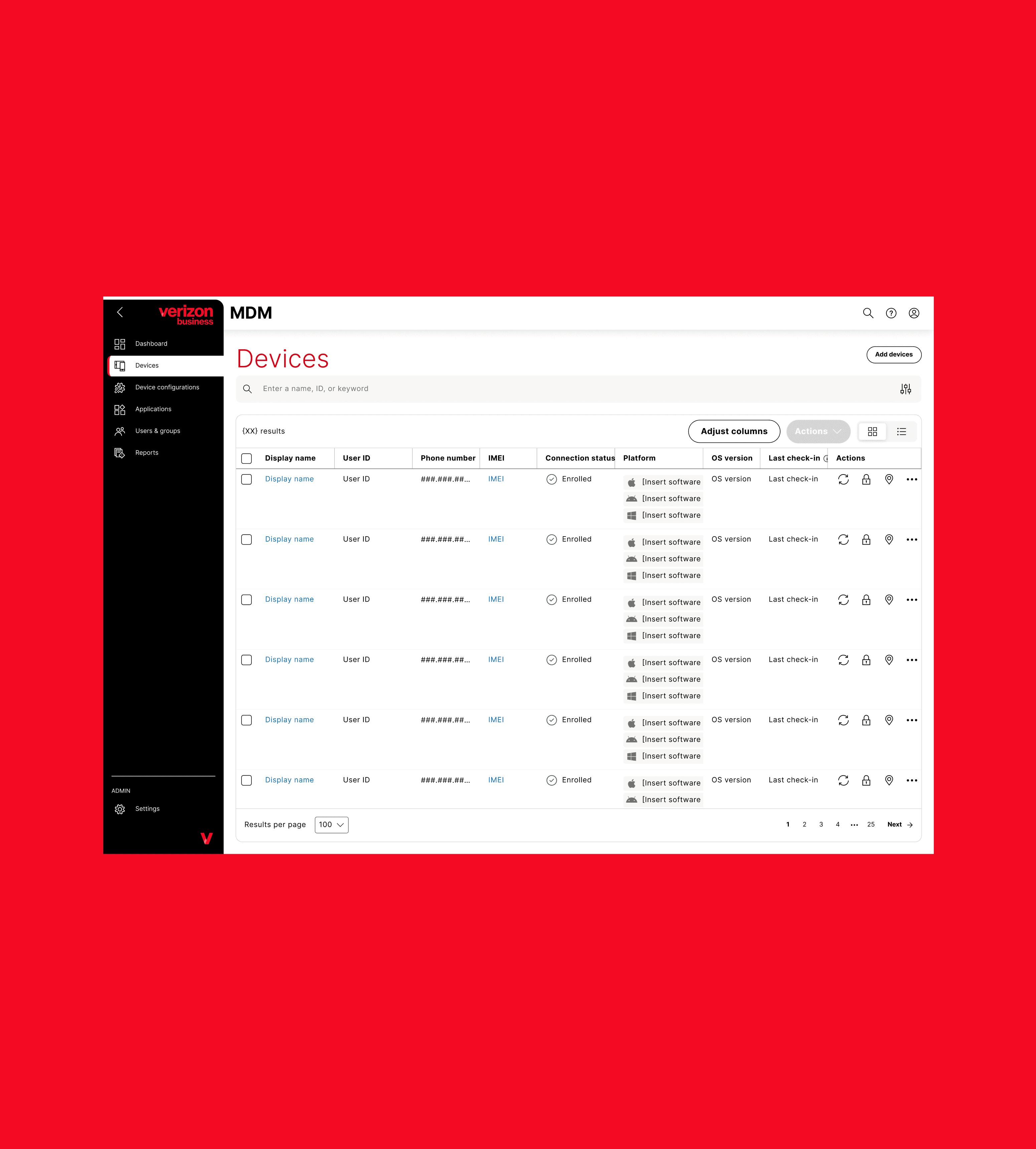
Sensors typically only surface symptoms—not root causes. The same sensor can trigger for different reasons across 1000s of devices, and environmental and contextual differences made blanket resolutions rare.
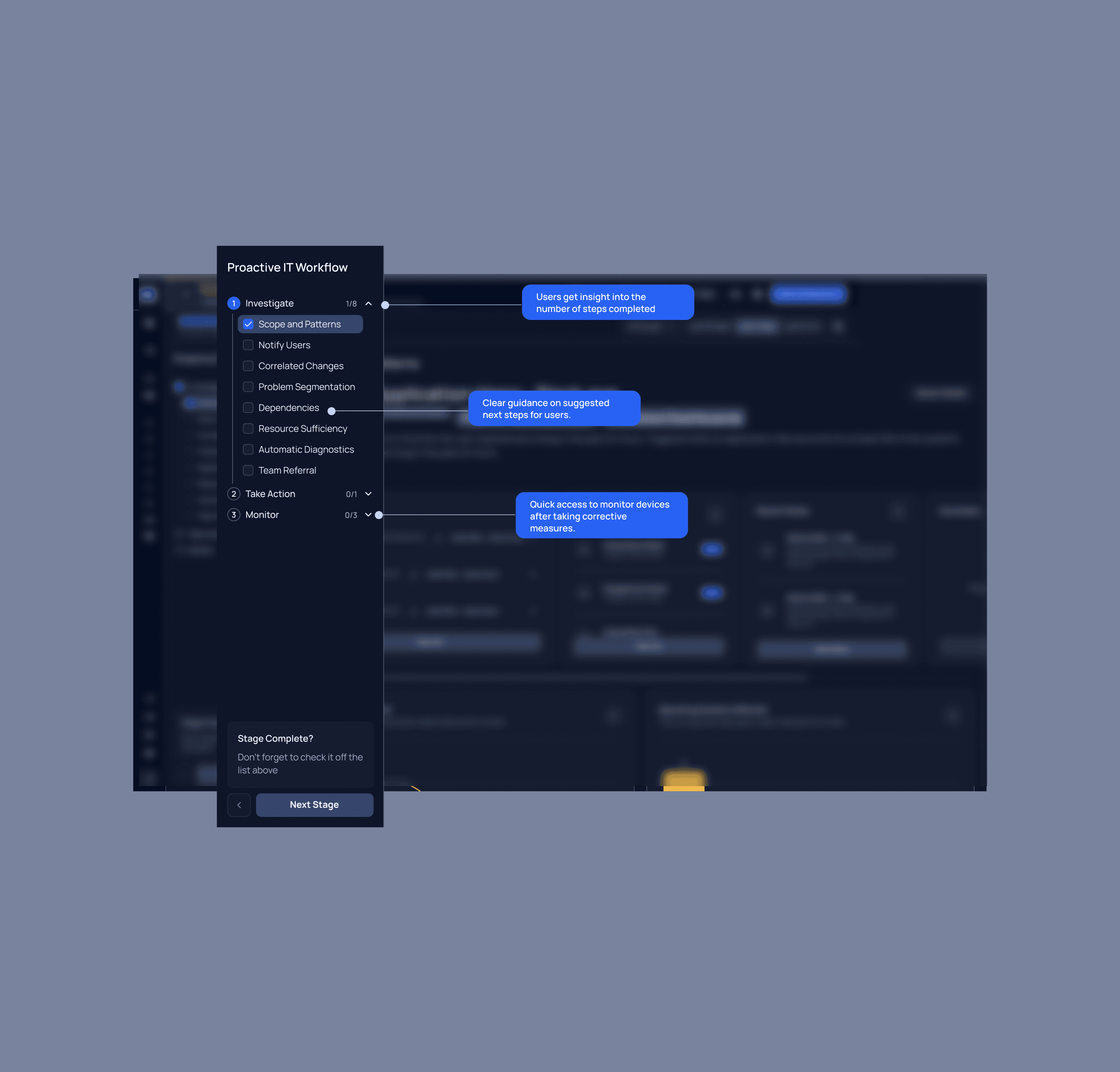
Problem solving required switching between high-level trends to identify widespread patterns, and device-level views to pinpoint root causes and verify fixes. Investigation, resolution, and monitoring continuously had to inform one another.
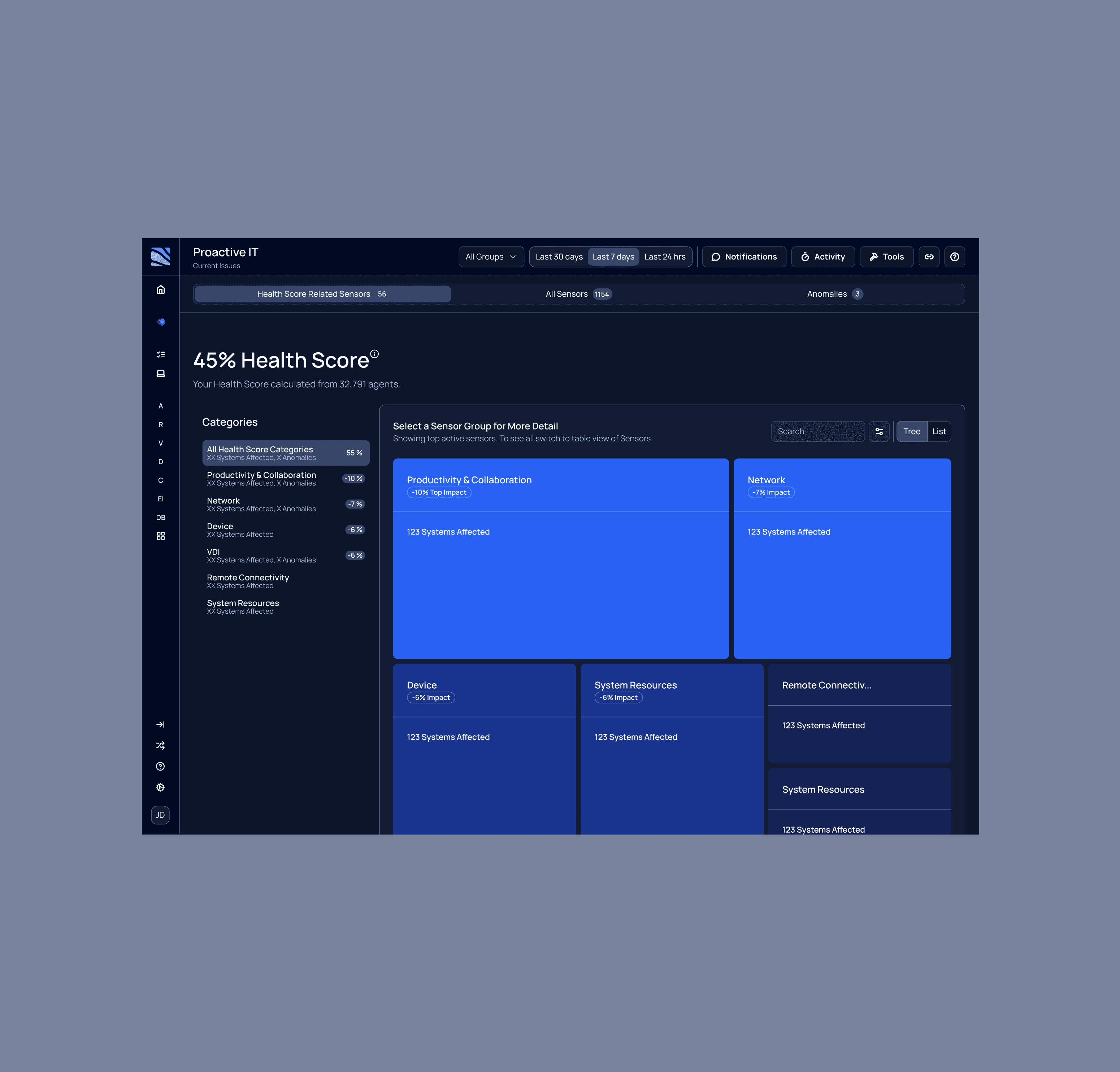
Progressive disclosure of data to determine problem focus.
Progressive disclosure of data to determine problem focus.
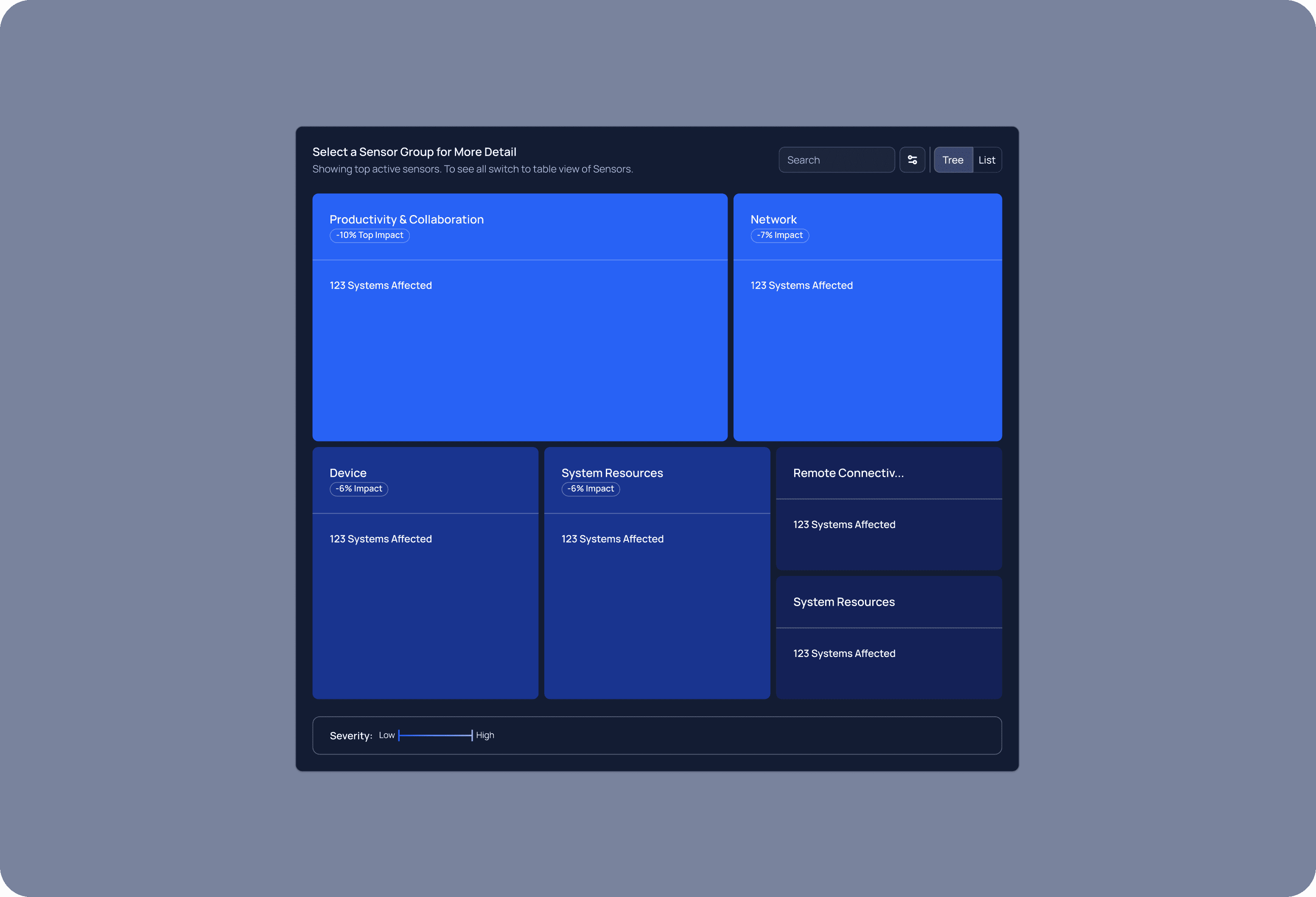
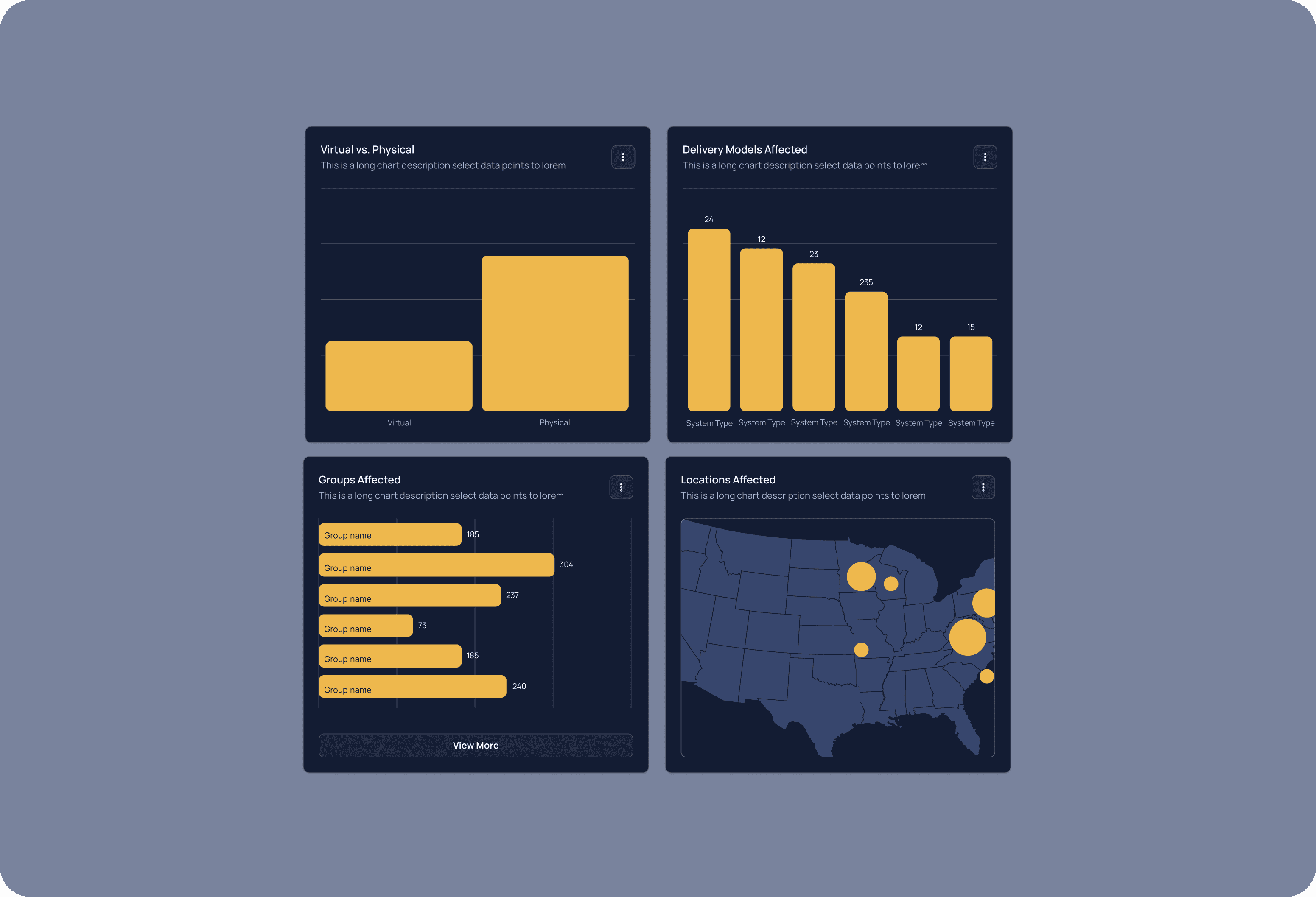
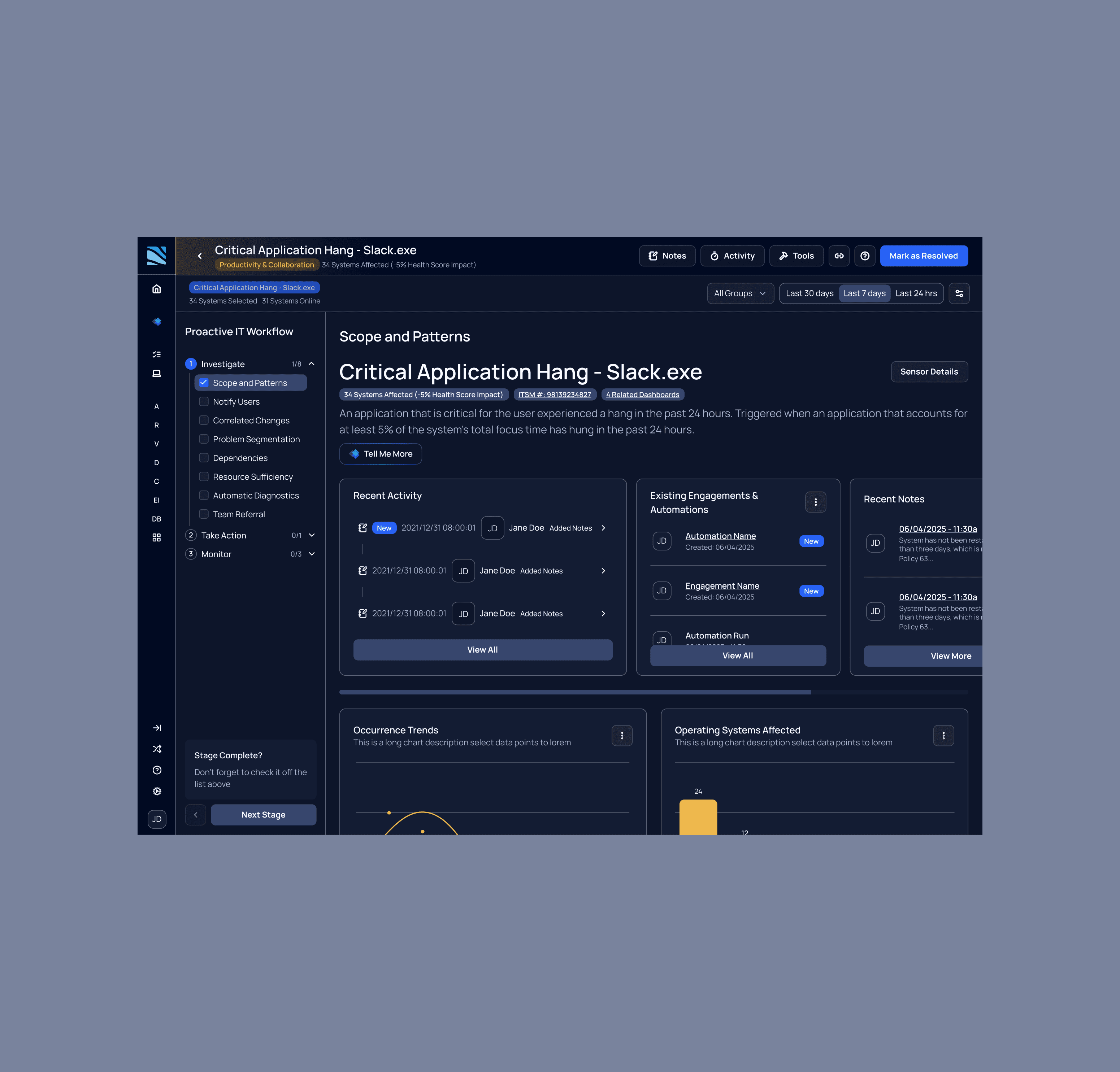
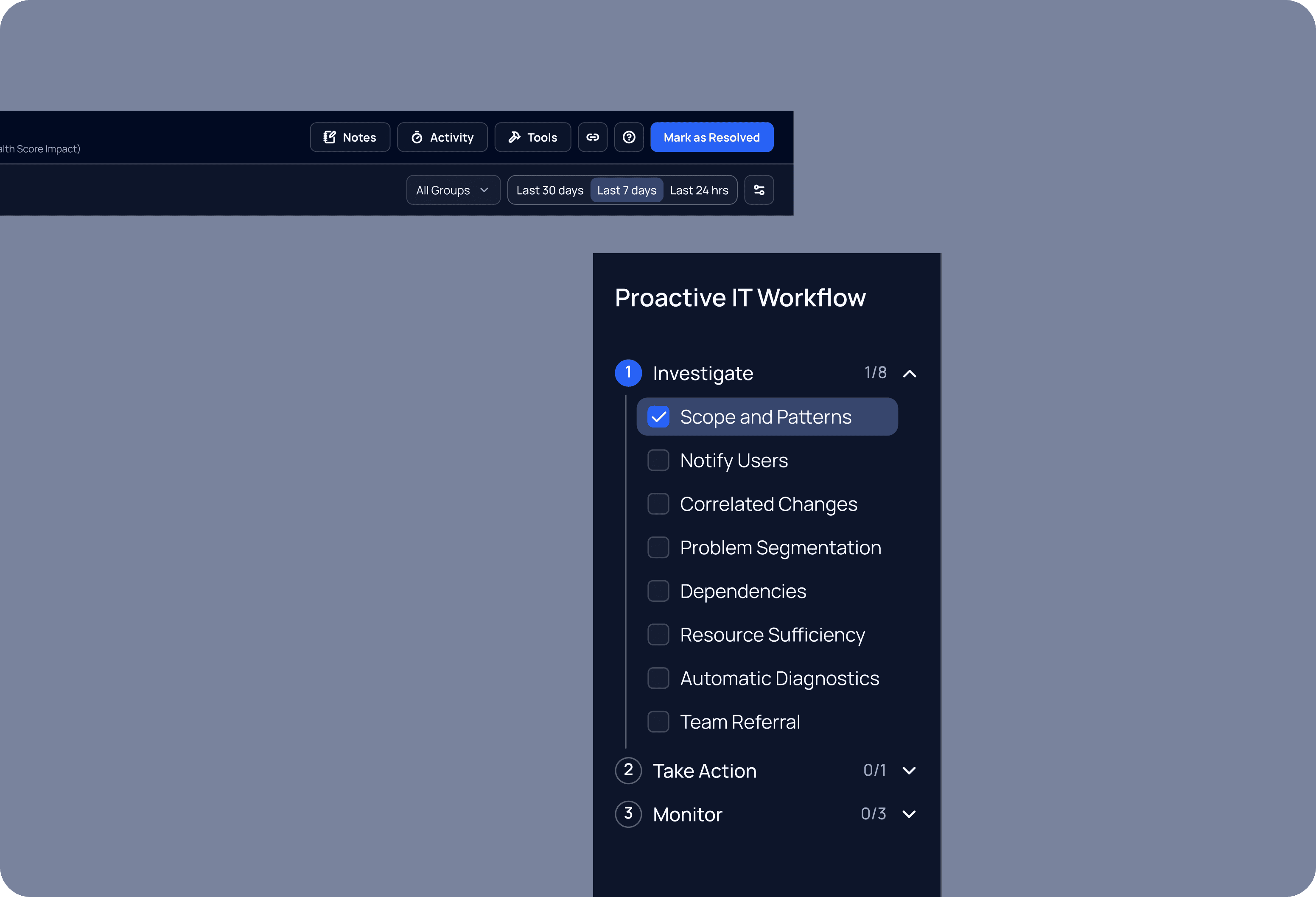
We introduced progressive disclosure to clarify how users drilled into data. Users first saw overall environmental impact (health score), then progressively explored mid-level signals to identify patterns and isolate root causes.
Rather than grouping issues by generic failures (e.g., “application crash”), flows were organized by the affected application (e.g., Slack), dramatically narrowing the set of plausible causes.
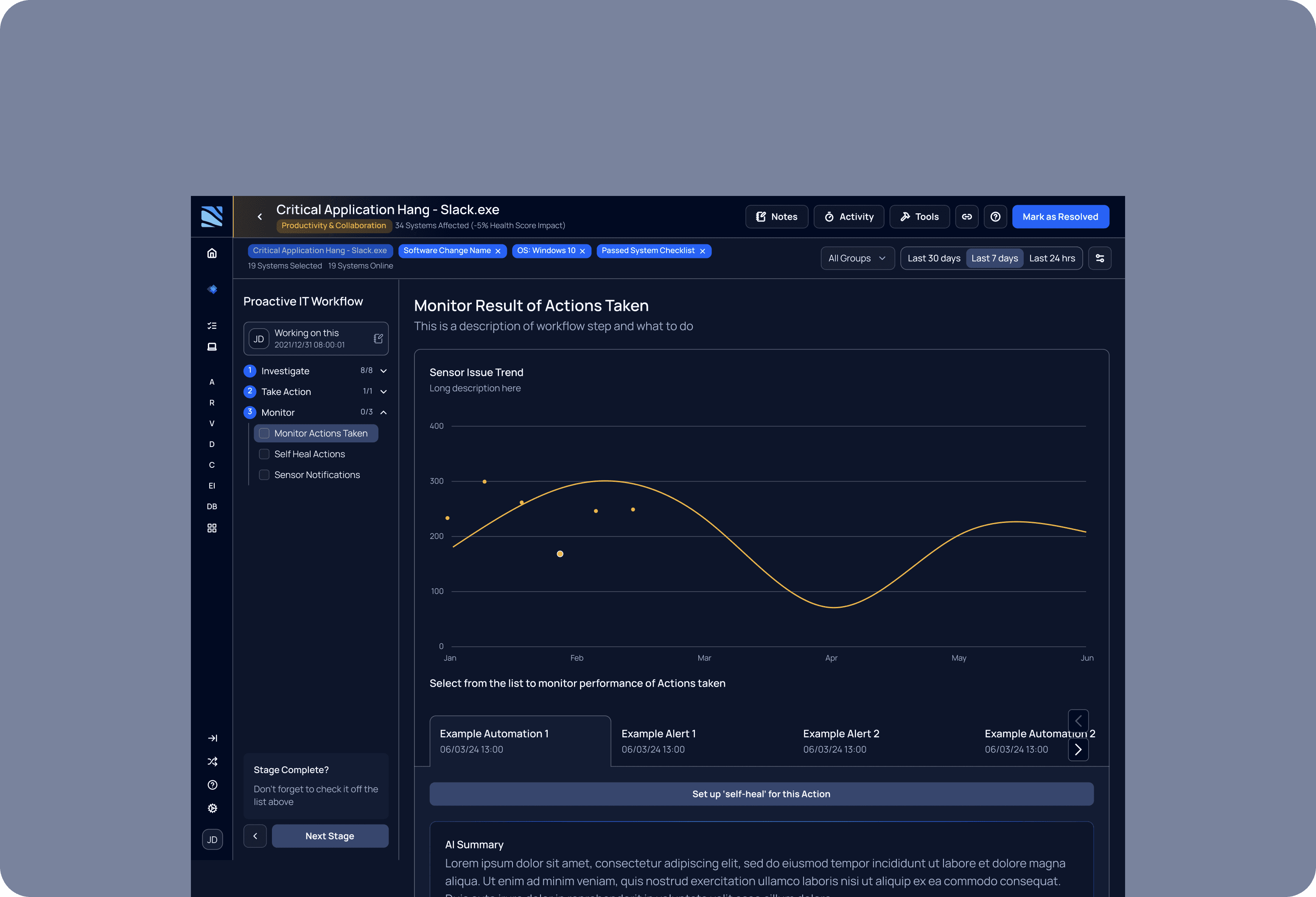
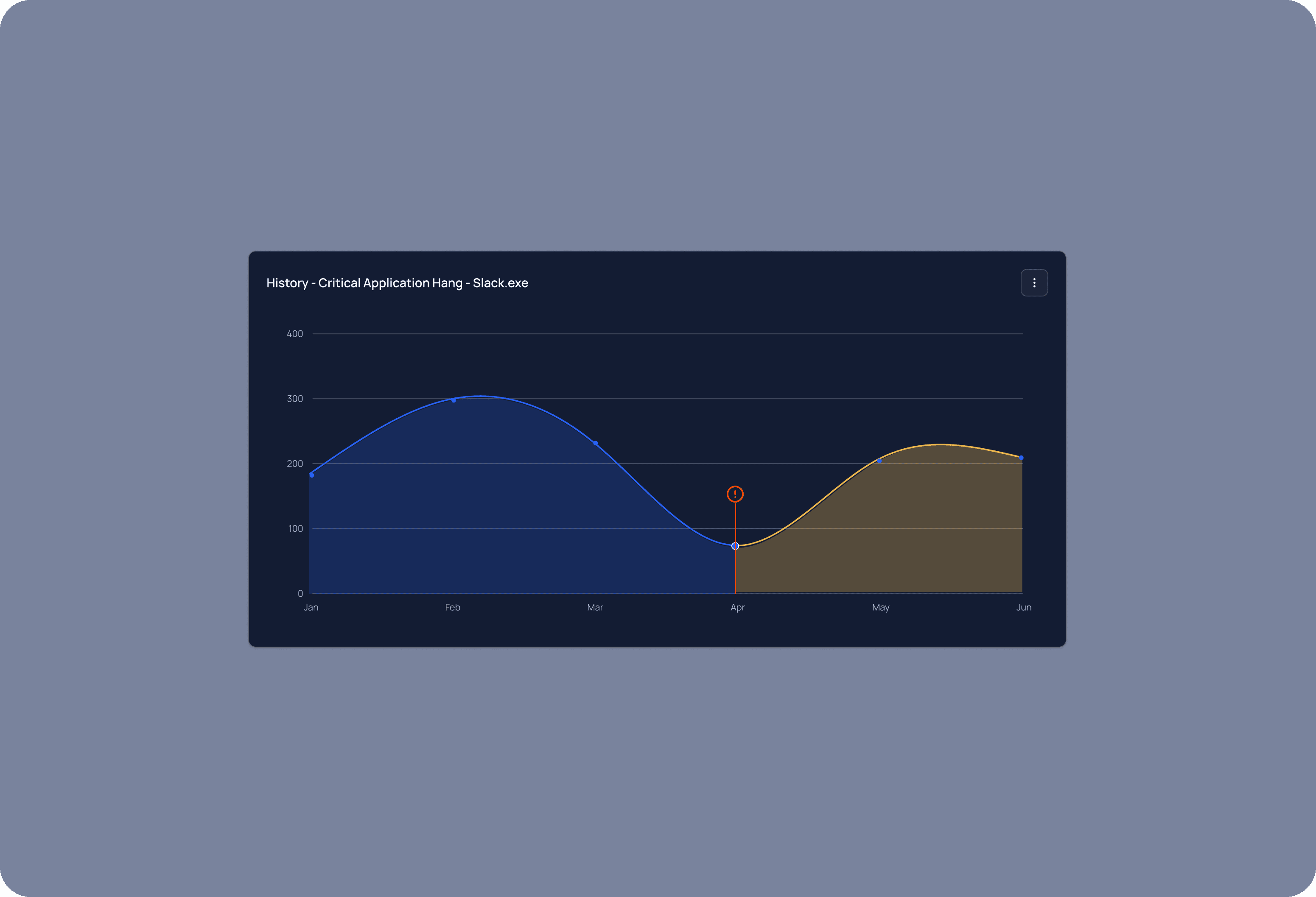
Tracking impact gave visibility into the effectiveness of their solutions.
Tracking impact gave visibility into the effectiveness of their solutions.
Instead of blindly trying different solutions, users could leave and come back to workflows to check how effective each solution was over time. This reduces repeated tactics amongst IT experts and allows clear tracking over time.
In three months, the Method team transformed a fragmented, data-heavy product into a guided, insight-driven platform.
In three months, the Method team transformed a fragmented, data-heavy product into a guided, insight-driven platform.
By introducing allowing for progressive disclosure of data to determine focus, designing workflows around user goals instead of tools and making resolution impact transparent we reduced cognitive load, improved decision clarity, and rebuilt confidence in the platform’s value.